
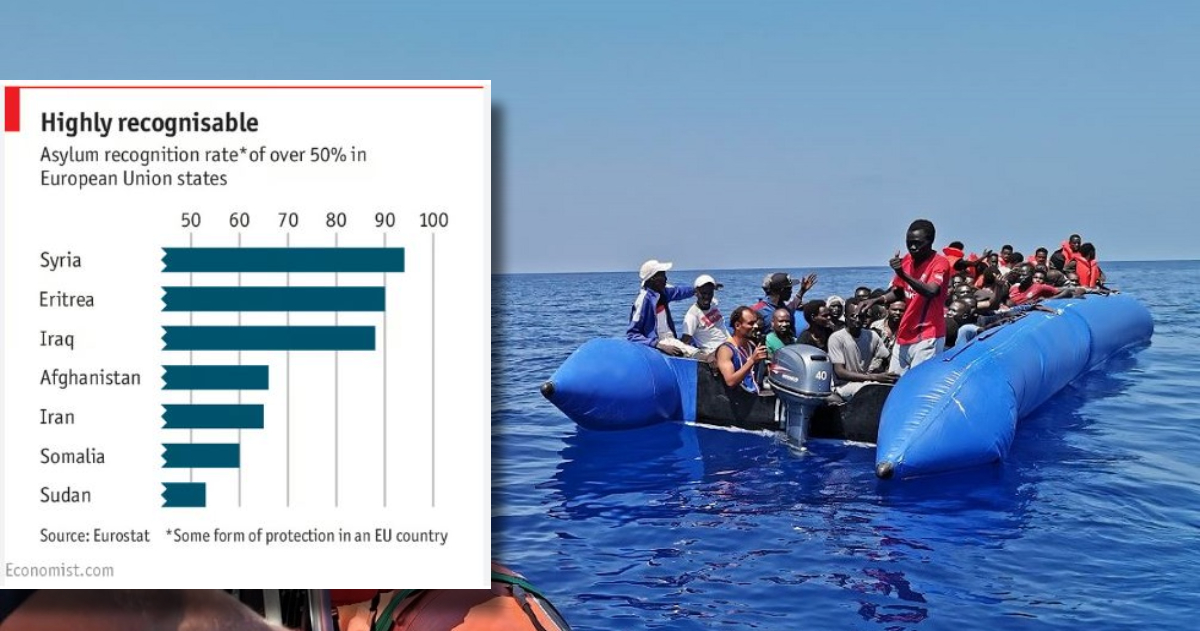
Asylum fraud has become a critical issue across Europe and North America, with significant consequences for immigration systems and communities. The Eritrean identity has emerged as the most commonly misrepresented nationality for asylum seekers, primarily due to UNHCR guidelines that facilitate automatic international protection for those claiming to be from Eritrea. This has led to a massive influx of non-Eritrean migrants, especially from the Horn of Africa countries, who falsely claim Eritrean nationality to secure fast asylum and eventually citizenship in Europe, UK, Canada, and the US.
This misguided, blanket policy of granting asylum to “Eritreans” has resulted in an overwhelming number of illegal migrants, particularly from Ethiopia’s Tigray region, who exploit the process by obtaining asylum status under an assumed ‘Eritrean identity’. Many from these regions have used refugee camps in Tigray to gain resettlement access to Canada and the US as “Eritrean” refugees.
An international human rights worker who told the BBC that an estimated 30% of those claiming to be “Eritrean” for asylum purposes are actually from Ethiopia. Some Ethiopians and Sudanese share languages, physical traits, and cultural similarities with Eritreans, making it easier for them to be mistaken for Eritrean—and significantly easier to obtain asylum under an “Eritrean” identity.
This manipulation not only distorts Eritrean migration statistics but also harms the reputation of genuine Eritrean communities. Crimes reported by the media as being committed by “Eritrean migrants” often involve individuals falsely claiming Eritrean identity. This widespread misrepresentation tarnishes the image of Eritrean communities who have built lives in their host countries.
The attached video (see below) is essential viewing for immigration officials across the UK, Europe, Israel, and Canada. It provides a detailed account of how Ethiopian migrants are coached on exploiting the “Eritrean case” for asylum through platforms like TikTok and Telegram.
The video reveals the methods, training, and resources shared to help migrants obtain UNHCR asylum papers, as well as background information on Eritrea’s culture, public holidays, and geography. It also exposes the network of people who are involved in providing advice and preparing the fake Eritrean case.
For instance, one of the coaches in the video repeatedly advised these asylum scammers from Ethiopia to change their social media profiles to feature the Eritrean flag or images of Eritrea’s president. They were also encouraged to participate in any anti-Eritrean government rallies pretending as members of the diaspora opposition. If possible, they were told to get filmed at these rallies, as this footage could later be used as “evidence” to avoid deportation to Eritrea if their asylum applications were denied.
This situation calls for urgent attention and policy revision to curb exploitation and restore the integrity of the asylum system. [TN]