
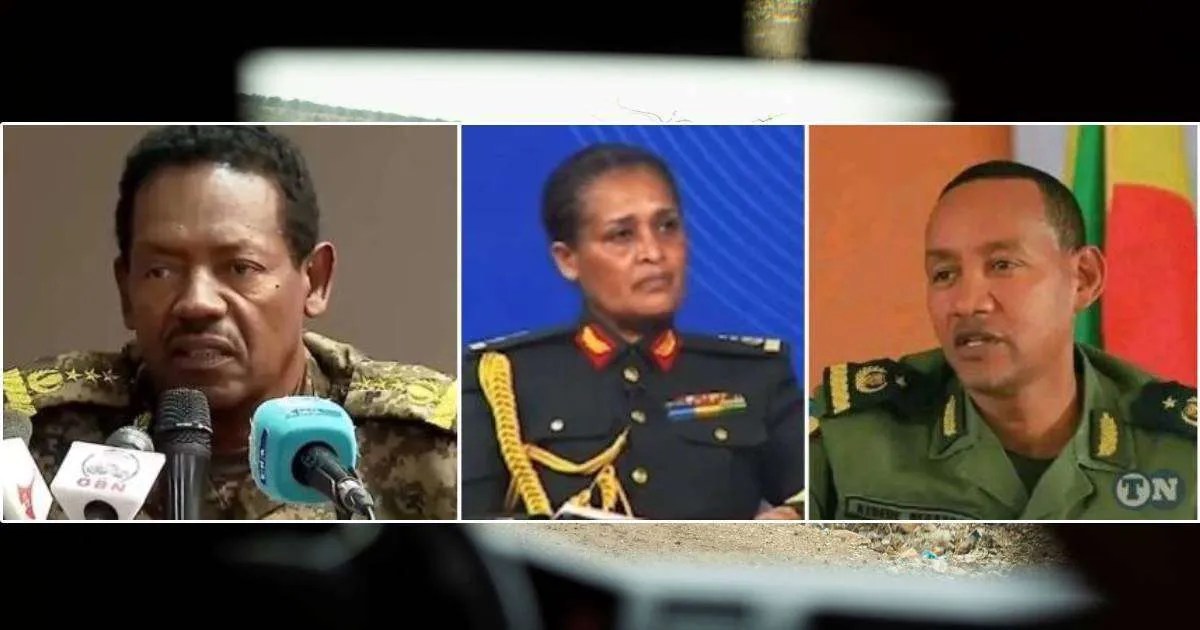
In recent months, Ethiopia’s military generals have begun voicing their dissatisfaction with the ongoing civil war in the country. These senior generals, though cautiously, implied their frustration with the Prime Minister’s reliance on military solutions to resolve political differences.
These rare criticisms indicates growing concern over within the army over trajectory of the nation in the last six years under Abiy Ahmed’s rule.
The country has witnessed a series of wars ever since. The Tigray War against the TPLF, clashes with the OLA-Shene in Oromia, and the recent uprising involving Fano militants in Amhara regions have collectively ravaged the nation.
These relentless conflicts have cost hundreds of thousands of lives, displaced millions, and obliterated billions of dollars worth of infrastructure, all in pursuit of the ambitions of Abiy Ahmed. Critics argue that these crises stem from the Prime Minister’s luck of experience and refusal to prioritize dialogue over violence, leaving the military overstretched and demoralized.
Adding to the domestic turmoil, Abiy’s controversial maritime foreign policy agenda risk destabilizing the Horn of Africa.
His ambition to transform landlocked Ethiopia into a maritime state, potentially through the use of force, if necessary, has alarmed not only neighboring countries but also his own army.
This shortsighted and provocative strategy has intensified fears of a broader regional conflict, further destabilizing the fragile country while placing additional strain on an already exhausted and demoralized army.
These escalating crises, therefore, have compelled senior military generals to publicly voice their concerns.
Prominent military figures such as Maj. Gen. Alemshet Degife, Maj. Gen. Tiruye Assefe, and Brig. Gen. Kebede Regasa have openly criticized the “unnecessary sacrifices” of their soldiers and the lose of civilian lives.
They have urged the Prime Minister and political leaders to seek peaceful resolutions to the country’s conflicts, warning that the current approach cannot continue indefinitely. However, Abiy Ahmed’s perceived egotism and resistance to dissent may prevent him from heeding their calls.
With the economy in shambles, living costs skyrocketing, and the threat of renewed conflict in Tigray looming, public frustration is reaching a boiling point. The question remains: will the military take matters into its own hands to end the self-inflicted crises that have plagued Ethiopia?
Or, will the Prime Minister finally find a way to address the nation’s grievances before it’s too late? [TN]