

Ample preparation and favorable rainfall resulted in a 138% increase in Eritrea’s crop production.
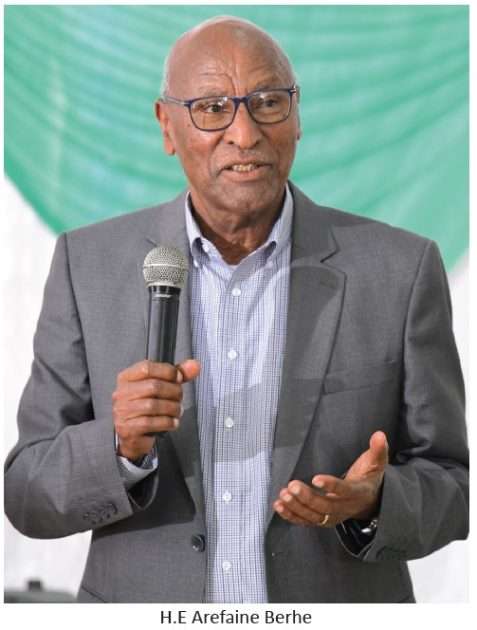
The Ministry of Agriculture (MoA) conducted its national annual assessment and validation meeting for the 2025 work plan from January 29–31, 2025, at Expo Hall in Asmara. The meeting was attended by H.E. Arefaine Berhe, Minister of Agriculture; Ms. Tekia Tesfamichael, President of the National Union of Eritrean Women; senior MoA officials and experts; Director Generals of Regional Agriculture and Land Departments; and representatives from key stakeholders, including the National Union of Eritrean Youth and Students, the National Union of Eritrean Women (NUEW), FAO, IFAD, AfDB, and others.
Below are excerpts from the major reports presented by MoA’s technical bodies during the assessment meeting.
Regional Reports Consolidated by the Agricultural Extension Department (AED)
Soil and Water Conservation:
A consolidated report from all six regions highlighted that a total of 53,000 hectares of on-farm and off-farm land underwent various soil and water conservation treatments, with renovation activities carried out on approximately 6,000 hectares. Additionally, over 1 million cubic meters of check dams were constructed, and around 100,000 cubic meters were renovated. During 2024, a total of 24 new micro dams were built, while approximately 22 more are currently under construction.
Crop Production:
According to the consolidated reports, Eritrea’s cereal harvest saw a remarkable 138% increase in 2024, attributed to favorable summer rainfall and coordinated efforts by farmers and agricultural experts. A total of 414,000 hectares were cultivated with cereals, with sorghum accounting for more than half, followed by pearl millet, teff, wheat, finger millet, barley, and maize. Additionally, oil crops and pulses were grown on 60,000 and 38,000 hectares, respectively, reflecting a slight increase compared to 2023.
Fruits and vegetables:
According to the report, in 2024, Eritrea harvested over 67,000 tons of fruits from 4,800 hectares and 182,000 tons of vegetables from 14,000 hectares. While the milk and egg production sectors require further improvement, the honey production subsector, comprising approximately 11,800 beekeepers, showed significant progress compared to the past five years.
Animal and Plant Health:
Thanks to the compulsory vaccination programs carried out by the MoA and its development partners, a total of over a million livestock were vaccinated, and subsequently no significant number of cases was registered. When it comes to desert and tree locust control activities, a total are of 770 thousand hectares of land was surveyed in the Northern Red Sea and Gash-barka regions, and control operations was put in place over 34 thousand hectares of land.
Small and Productive Farm Plot (SPFP):
 SPFP is a new strategy developed by the MoA and integrates crops like cereals, pulses, oil seeds and vegetable production to benefit rural households who depends on the rains and those who reside in water stressed areas. It is implemented on average 1,000 meter square plot of land in three rounds based on agro-ecological zones of the country. Its main objective is to harvest considerable amount of cereals from a small plot of land with the help of row planting, application of compost and improved seed varieties; and application of enough water, when needed.
Its additional advantage is that it incorporates vegetables with sweet potato as a permanent plant and crop residue for their livelihood. The first round of SPFP was piloted, for the first time, in four regions of the country that receive summer rains from June – September. Accordingly, more than 12,000 rural households participated in this first round, and commendable achievement was registered. There were farmers who harvested around 10 quintals of cereals, mainly wheat, from their small plot.
Notational Agricultural Research Institute (NARI):
NARI conducts agricultural research activities in three main stations namely; Halhale, Golij and Shambuko, as well as in sub-stations of Gahtelay, Sheeb, Hagaz, Agordat and Adikeyh. During the assessment meeting, it was highlighted that the institute has made available nine improved wheat varieties and one bean variety ready to be released to farmers through AED following approval of quality assurance from the Regulatory Services Department (RSD).
NARI, through its Natural Resources Management Research (NRMR) Division prepared an integrated soil fertility map for Adi-ghebru and conducted soil, water and fertilizers analyses for 573 samples collected from all regions of the country.
NARI also reported that it improved the efficiency of furrow irrigation on potato plots by 67% when compared to the conventional systems. Additionally, NARI’s report indicated that a promising result was registered in developing a low cost and naturally ventilated storage structure for onion. NARI, through its Genetic Resources Research body, also carried out satisfactory germplasm conservation and maintenance activities regenerating 25 sorghum, four common bean, 11 field pea, 17 lentil and 24 grass pea accessions.
Regulatory Services:
The Regulatory Services Department (RSD) of the MoA diligently works, through its regional inspectors, to ensure the safety of animal and plant food products before they enter market. RSD also works to ensure proper food processing chain is maintained and cross contamination is avoided. The department reported that around 23 tons of obsolete agro-chemicals were disposed in collaboration with relevant government bodies and around 140 tons of similar chemicals are also waiting for disposal. The seed release committee which is chaired by the RSD also conducted inspection tours on various farmlands to check the quality of basic seeds under multiplication. Similarly, two guidelines were prepared with regards to vegetables’ and potato seed quality assurance.
Within its natural resources inspection activities, RSD reported that it conducted a salinity test inspection in Forto-sawa and Dige irrigated farms, and confirmed no salinity case was reported. The department also reported that it conducted extensive awareness raising meetings and workshops which were attended by around 2,700 participants.
Moreover, supporting bodies of the MoA namely: the National Animal and Plant Health Laboratory; Administration and Finance; Planning and Statistics; Public Relations; Agricultural Strategic Information; Legal Services and Internal Audit presented their annual reports.
Recommendations:
After thorough discussions, participants of the MoA’s national annual assessment meeting called for enhancing use of the newly constructed dams and evaluating their impacts on agricultural development; empowering and equipping small and medium commercial farmers with solar powered irrigation systems; minimizing post-harvest loses; promoting organic farming; strengthening the rearing of local backyard poultry; renovating slaughter houses and milk collection centers, reinforcing research on livestock breeding, among others.
Awards:
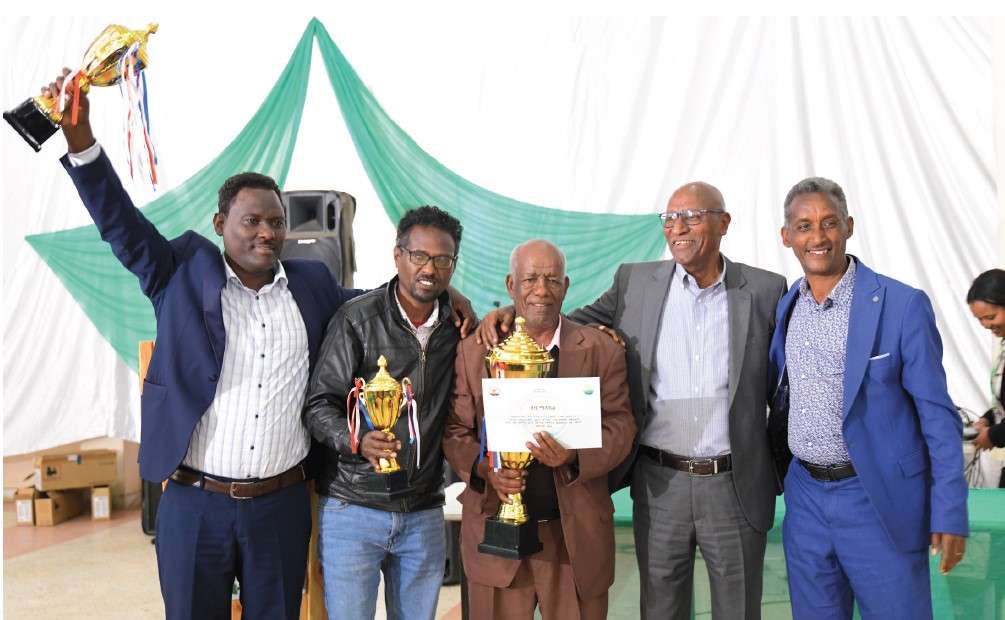
During the event, a total of 100 front-line agricultural experts, researchers and inspectors as well as their coordinators were given awards for their outstanding contributions in promoting the SPFP.
Moreover, Maekel, Anseba and Debub Regions stood, consecutively, from first to third, and were awarded trophies. Similarly, Berik, Serejeka and Aditekliezan sub-regions were also awarded trophies for their commendable contributions to the success of the SPFP first round at sub-region level.
Closing Remarks:
In his closing remarks, Minister Arefaine Berhe commended all MoA HQ organs bodies and regional branches for the improvements in their reporting formats which were clear and measurable. The reports which were prepared and presented by young female and male staff also witnessed smooth transition of tasks to the ministry’s new generation, the Minster added. He also commended the awarded regions for their diligence and hard work in promoting SPFP and called the other regions to strengthen their efforts.
The Minister also affirmed that bee keeping using top-bar hives as well as rearing and multiplication of backyard poultry will be pre-requisites for the coming year’s awards.
Finally, Minister Arefaine urged all agricultural experts and their coordinators at all levels to collaborate with NUEYS and NUEW to form a bilateral committee to make every Eritrean village engage in SPFP. [SOURCE: MOI ERITREA]